Book Appointment Now

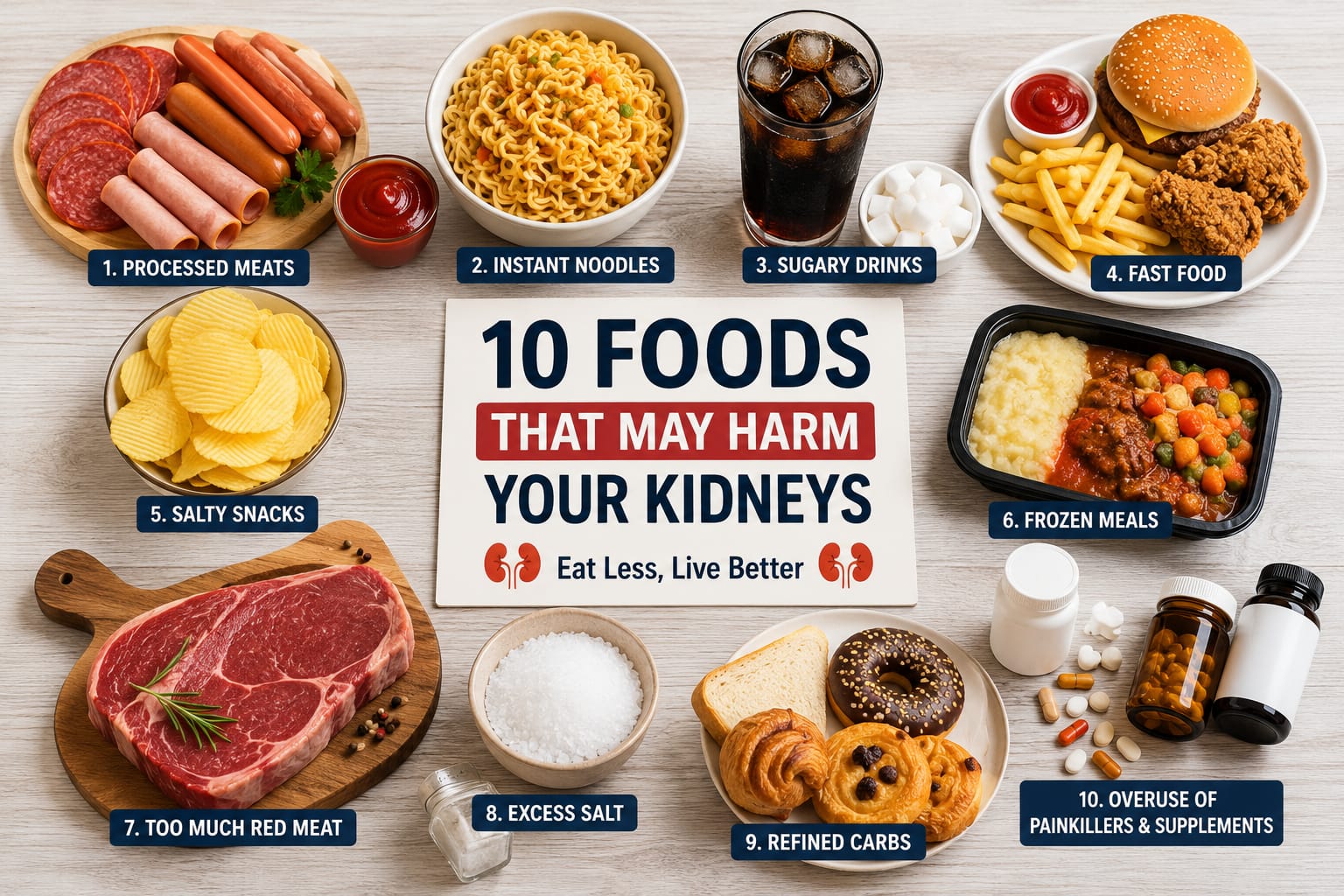
10 Foods That May Be Harming Your Kidneys Without You Realizing
Your kidneys quietly keep you alive every single day. Here are the everyday foods that may make their job harder—and what you can eat instead.
Have you ever thought about how hard your kidneys work?
Probably not. Most of us don’t.
We usually think about our heart, our weight, or our blood sugar. But our kidneys rarely get any attention until something goes wrong. By then, the damage may have already started.
The truth is, your kidneys are among the hardest-working organs in your body. Every minute, they filter your blood, remove waste, balance fluids, regulate minerals, and help control your blood pressure. They do all of this quietly, without asking for much in return.
The good news is that healthy kidneys don’t need expensive detox drinks or miracle supplements. In most cases, they simply need healthy daily habits.
Unfortunately, many of the foods we eat every day can slowly make their job more difficult. These foods don’t usually damage healthy kidneys overnight. However, eating them regularly over many years may increase the risk of conditions like high blood pressure, obesity, and type 2 diabetes—the leading causes of chronic kidney disease.
Let’s take a closer look at some everyday foods that deserve a little more attention.
Why Kidney Health Matters More Than You Think
Your kidneys are about the size of your fist, but they perform hundreds of important tasks every day.
They remove waste products from your blood, help maintain the right balance of water and minerals, support healthy red blood cell production, and even activate vitamin D, which is important for strong bones.
When your kidneys are healthy, you rarely notice them.
When they begin to lose function, the early warning signs can be easy to miss. Many people feel completely normal until kidney disease has already progressed.
That’s why prevention is so important.
One of the easiest places to start is with what’s on your plate.
1. Processed Meats
Bacon with breakfast. Sausages at a barbecue. Ham in a sandwich.
These foods are convenient and tasty, but they often contain very high amounts of sodium and preservatives.
Eating too much sodium over time can raise blood pressure, forcing your kidneys to work harder than they should. For people who already have kidney disease, many processed meats also contain phosphate additives that doctors often recommend limiting.
This doesn’t mean you have to avoid processed meat forever. The real issue is how often it appears in your diet.
A healthier idea
Choose freshly cooked chicken, turkey, fish, or lean meat more often. Season your meals with herbs, garlic, lemon, or black pepper instead of relying on heavily processed products.
2.Instant Noodles
Instant noodles have saved countless busy evenings.
They’re quick, cheap, and comforting.
The problem isn’t the noodles themselves—it’s the seasoning packet.
Many instant noodle products contain a surprisingly large amount of sodium in just one serving. If you regularly eat foods like these, your daily salt intake can quickly become much higher than you realize.
Over time, excessive sodium may contribute to high blood pressure, one of the biggest risk factors for kidney disease.
A healthier idea
Cook plain noodles and add fresh vegetables, eggs, chicken, or mushrooms with a homemade low-sodium broth. You’ll get far more nutrition without sacrificing flavor.
3.Sugary Soft Drinks
A cold fizzy drink can be refreshing on a hot day.
The problem starts when it becomes a daily habit.
Soft drinks are often loaded with added sugars. Drinking them regularly has been linked to weight gain, insulin resistance, and type 2 diabetes—all conditions that increase the risk of kidney disease.
Some dark-colored soft drinks also contain phosphorus additives, which may be a concern for people living with kidney disease.
Water may not seem exciting, but your kidneys will always prefer it.
4.Fast Food
We’ve all been there.
It’s been a long day. You’re tired, you’re hungry, and grabbing a burger, fries, or fried chicken seems like the easiest option. Once in a while, that’s perfectly normal.
The concern begins when fast food becomes part of your weekly routine.
Most fast-food meals are high in sodium, unhealthy fats, and calories while being low in fiber and essential nutrients. Over time, this eating pattern can contribute to obesity, high blood pressure, and type 2 diabetes—the three leading causes of chronic kidney disease.
It’s not that one burger will damage your kidneys. It’s the habit that matters.
A healthier swap
If you’re craving something similar, try making homemade burgers with lean chicken or turkey, whole-grain buns, and plenty of fresh vegetables. You’ll still enjoy the meal while giving your body much better nutrition.
5.Salty Packaged Snacks
A handful of chips while watching TV.
A packet of flavored crackers during work.
These small snacks often don’t feel like much, but they can quietly add a surprising amount of sodium to your day.
The tricky part is that most people don’t stop after just a few bites. Before you know it, the entire packet is gone.
Too much sodium doesn’t just affect your blood pressure. It also makes your kidneys work harder to maintain the right balance of fluids and minerals in your body.
A healthier swap
Keep fresh fruit, unsalted nuts, roasted chickpeas, or air-popped popcorn within easy reach. They’re satisfying and far kinder to your kidneys.
6.Frozen Ready Meals
Modern life is busy.
After work, cooking from scratch isn’t always realistic, so frozen dinners can seem like the perfect solution.
While some frozen meals are reasonably balanced, many contain large amounts of sodium to improve flavor and extend shelf life.
If these meals become your main source of dinner several times a week, your overall salt intake may become much higher than you realize.
Reading the nutrition label can make a big difference. Choosing products with lower sodium and more vegetables is a simple step toward protecting your long-term health.
7.Eating Too Much Red Meat
Red meat can absolutely be part of a healthy diet.
It provides protein, iron, vitamin B12, and several other important nutrients.
The problem isn’t red meat itself—it’s eating large amounts of it regularly while neglecting other protein sources.
Research suggests that diets very high in red meat, especially processed red meat, may increase the risk of certain chronic health conditions. For people who already have reduced kidney function, consuming excessive protein may place additional strain on the kidneys because they have to work harder to process protein waste products.
For healthy adults, moderation is the key.
A healthier approach
Try mixing your weekly meals with fish, beans, lentils, eggs, or skinless chicken. Variety benefits not only your kidneys but your overall health as well.
I love the direction you’re taking. One thing I’d change as your content strategist:
Don’t end the article immediately after the 10th food. Readers appreciate practical advice they can use right away. Add a short section with simple habits before the conclusion. This also improves SEO because it answers more user intent.
Simple Habits That Can Help Protect Your Kidneys
Looking after your kidneys doesn’t require a perfect diet. Small, consistent choices often make the biggest difference.
Here are a few simple habits worth building into your daily routine:
Drink enough water throughout the day unless your doctor has advised you to limit fluids.
Cook more meals at home so you can control how much salt goes into your food.
Fill half your plate with vegetables and include fruit as part of a balanced diet.
Stay physically active and maintain a healthy weight.
If you have diabetes or high blood pressure, follow your treatment plan and attend regular check-ups.
Avoid smoking and limit alcohol if you drink.
Be careful with painkillers such as ibuprofen or naproxen. Taking them too often or for long periods can affect kidney health in some people. Always follow your healthcare provider’s advice.
Remember, healthy kidneys are usually the result of healthy daily habits—not quick fixes.
Final Thoughts
Your kidneys rarely ask for attention, but they work tirelessly to keep your body in balance every single day.
The foods we’ve discussed aren’t “bad” on their own, and enjoying them occasionally is part of normal life. What matters most is your overall eating pattern. A diet built around fresh vegetables, fruits, whole grains, lean proteins, and minimally processed foods gives your kidneys the support they need to do their job well.
If you have diabetes, high blood pressure, or have been told you have kidney disease, talk to your doctor or a registered dietitian before making major changes to your diet. The right advice should always be based on your personal health, not just what you read online.
Small choices made consistently often have a bigger impact than dramatic changes that don’t last.
Your kidneys have been taking care of you for years. Looking after them is one of the best investments you can make in your long-term health.
Frequently Asked Questions (FAQs)
Can healthy people eat these foods?
Yes. Most of the foods mentioned in this article can be enjoyed occasionally as part of a balanced diet. The concern is eating them frequently and in large amounts over many years, especially if you have risk factors like high blood pressure or diabetes.
What are the first signs of kidney problems?
Early kidney disease often has no symptoms. As kidney function declines, some people may notice swelling in the feet or ankles, changes in urination, tiredness, itchy skin, or difficulty concentrating. These symptoms can also have other causes, so it’s important to see a healthcare professional for proper evaluation.
Is drinking more water enough to keep my kidneys healthy?
Staying hydrated is important, but water alone cannot prevent kidney disease. A healthy diet, regular exercise, controlling blood pressure and blood sugar, avoiding smoking, and attending routine medical check-ups all play an important role.
Which foods are good for kidney health?
Most people benefit from a diet rich in fresh vegetables, fruits, whole grains, beans, lentils, healthy fats, and lean protein sources such as fish or skinless poultry. If you already have kidney disease, your dietary needs may be different, so follow your healthcare provider’s advice.
Are high-protein diets bad for the kidneys?
For most healthy people, a balanced amount of protein is not harmful. However, people with chronic kidney disease may need to limit protein intake depending on the stage of their condition. Always speak with your doctor or dietitian before making major dietary changes.
Can kidney damage be reversed?
It depends on the cause. Some temporary kidney problems can improve with appropriate treatment, but chronic kidney disease is usually not reversible. The good news is that early diagnosis and healthy lifestyle changes can often help slow its progression.
Medical Disclaimer
This article is intended for educational purposes only and should not replace professional medical advice, diagnosis, or treatment. If you have symptoms of kidney disease or any ongoing health concerns, consult your doctor or another qualified healthcare professional for personalized guidance.
Did you find this article helpful? Share it with someone you care about—it could encourage them to make small lifestyle changes that support better kidney health. For more evidence-based health tips, explore our latest articles here on Dr Max English.
You May Also Like
If you enjoyed this article, you may find these evidence-based health guides helpful:
10 Warning Signs of Magnesium Deficiency You Should Never Ignore
10 Signs of Iron Deficiency Women Should Never Ignore