Book Appointment Now

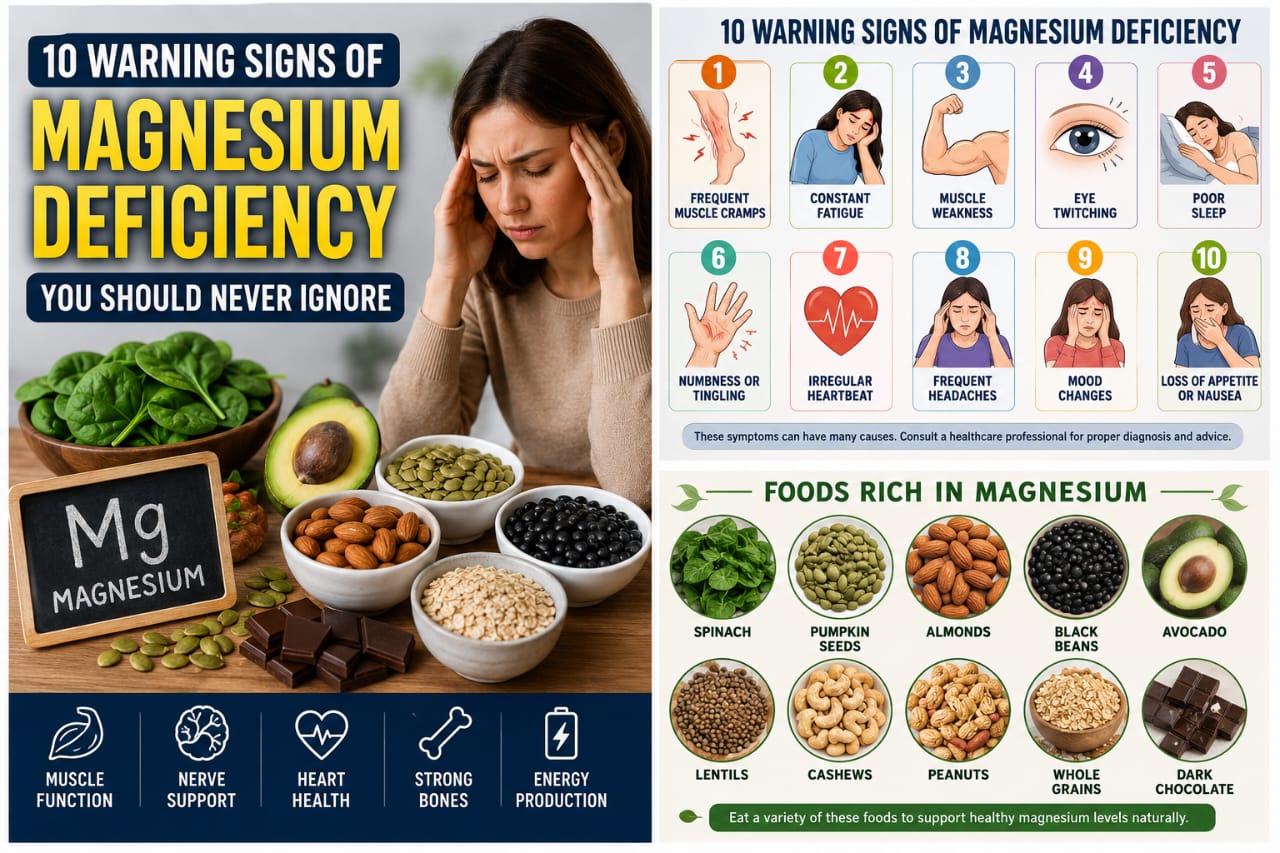
10 Warning Signs of Magnesium Deficiency You Should Never Ignore
Introduction
Magnesium deficiency symptoms can be easy to miss at first. Do you often feel tired even after getting enough sleep? Do you experience muscle cramps, poor sleep, or frequent headaches? These common problems may have many possible causes, but in some people they can be linked to low magnesium levels.
Magnesium is an essential mineral that supports hundreds of important processes in the body. It helps your muscles work properly, supports healthy nerves, keeps your heart beating normally, and plays a key role in energy production. However, many people do not get enough magnesium from their daily diet.
In this article, you’ll learn the most common warning signs of magnesium deficiency, who may be at risk, and simple ways to maintain healthy magnesium levels.
What Is Magnesium?
Magnesium is a mineral that your body needs every day. It is involved in more than 300 natural processes, including muscle movement, nerve function, blood sugar regulation, bone health, and protein production.
Because your body cannot produce magnesium on its own, it must come from foods or supplements when recommended by a healthcare professional.
What Causes Magnesium Deficiency?
Several factors can increase the risk of magnesium deficiency, including:
- Eating too few magnesium-rich foods
- Digestive conditions that reduce nutrient absorption
- Long-term use of certain medicines such as some diuretics or proton pump inhibitors
- Poorly controlled diabetes
- Heavy alcohol use
- Older age
Having one of these risk factors does not always mean you have a deficiency, but it may increase the chance.
10 Warning Signs of Magnesium Deficiency
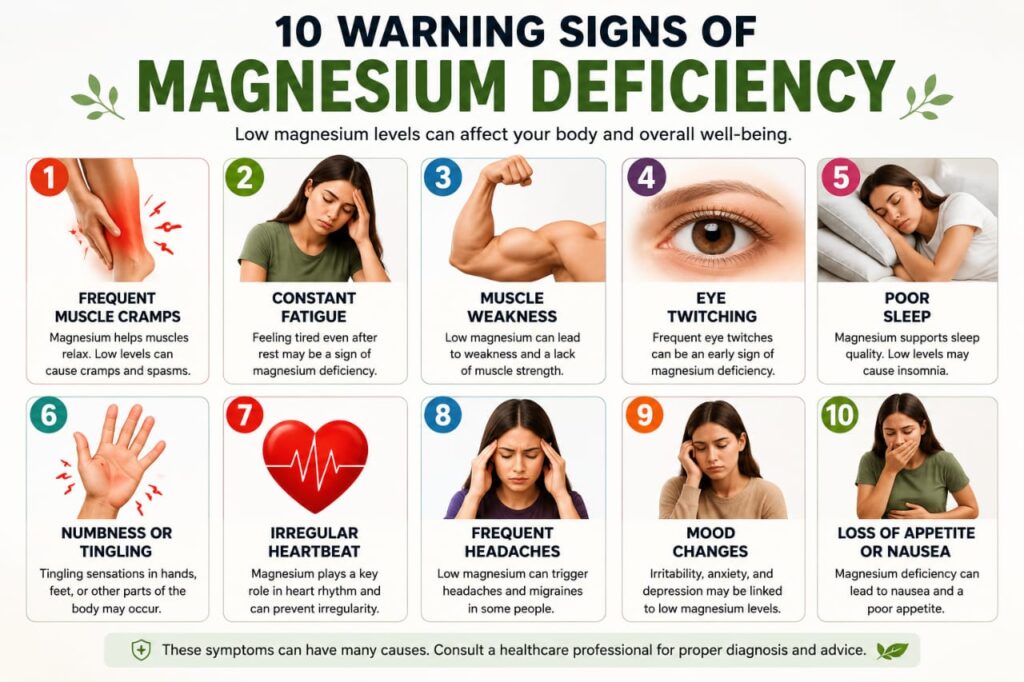
1. Frequent Muscle Cramps
Muscle cramps are one of the most common signs of low magnesium. Magnesium helps muscles relax after they contract. Low levels may increase muscle tightness, spasms, or cramps, especially in the legs and calves.
2. Constant Fatigue
Feeling tired all the time can have many causes, including poor sleep, stress, or medical conditions. However, magnesium deficiency may also contribute because magnesium helps your body produce energy from food.
3. Muscle Weakness
If everyday activities suddenly feel more difficult than usual, muscle weakness may be one possible sign of low magnesium. Healthy muscles need magnesium to work efficiently.
4. Eye Twitching
A small twitch under your eye is usually harmless and often goes away on its own. In some cases, repeated eye twitching may be associated with low magnesium, stress, or fatigue.
5. Poor Sleep
Magnesium helps support normal nerve function and relaxation. Some people with low magnesium report difficulty falling asleep or staying asleep. Good sleep also depends on healthy habits, stress management, and overall health.
6. Numbness or Tingling
Magnesium plays an important role in nerve function. Low levels may sometimes contribute to tingling or numbness in the hands, feet, or other parts of the body. Persistent numbness should always be evaluated by a healthcare professional.
7. Irregular Heartbeat
Magnesium helps maintain a normal heartbeat. In more severe cases of deficiency, low magnesium can affect heart rhythm. Seek medical care immediately if you experience chest pain, fainting, or a fast or irregular heartbeat.
8. Frequent Headaches
Headaches have many possible causes, including dehydration, lack of sleep, and stress. Some research suggests that magnesium may play a role in certain types of headaches, but it is not the cause of every headache.
9. Mood Changes
Low magnesium may be linked with changes in mood, such as increased irritability or feeling anxious in some people. Mood changes are complex and can result from many different physical and emotional factors.
10. Loss of Appetite or Nause
In more significant magnesium deficiency, some people may notice a reduced appetite, nausea, or general discomfort. These symptoms are not specific to magnesium deficiency and should be assessed if they continue.
Foods Rich in Magnesium
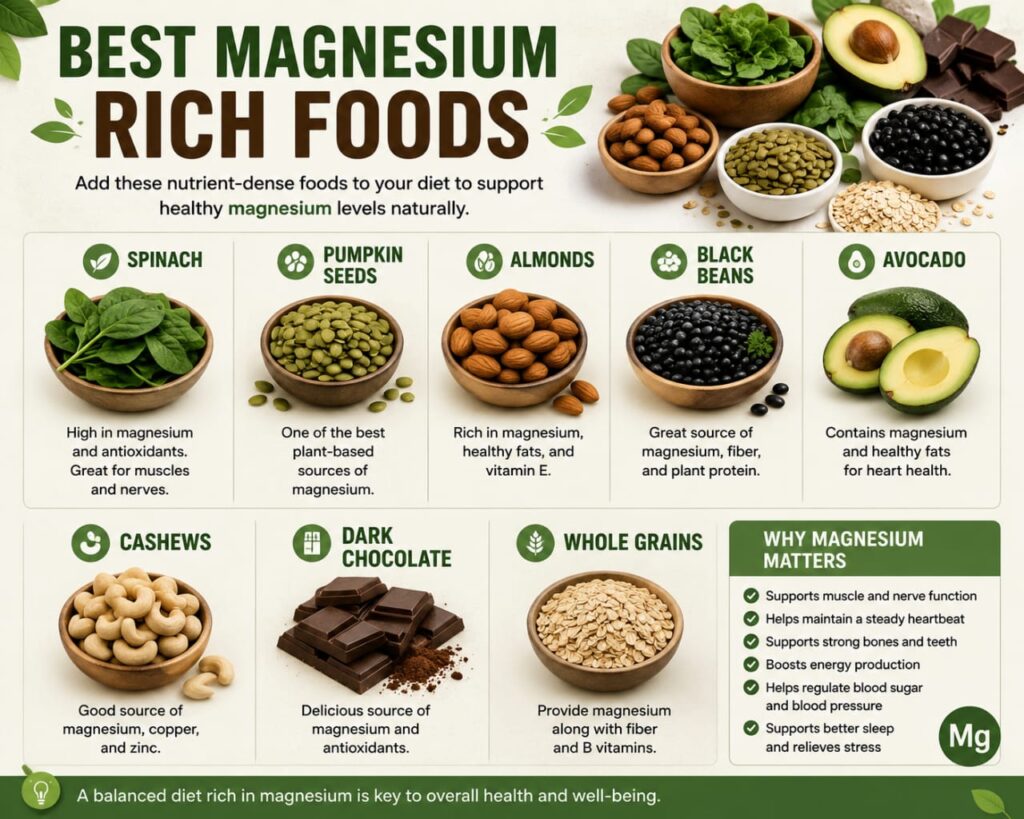
The best way to support healthy magnesium levels is by eating a balanced diet.
Good sources include:
- Spinach
- Pumpkin seeds
- Almonds
- Cashews
- Peanuts
- Black beans
- Lentils
- Avocados
- Whole grains
- Dark chocolate (in moderation)
Eating a variety of these foods regularly can help meet your daily magnesium needs.
Can You Take Magnesium Supplements?
Some people may benefit from magnesium supplements, but they are not necessary for everyone.
Too much magnesium from supplements may cause side effects such as diarrhea or stomach upset. People with kidney disease or other medical conditions should only take supplements after speaking with a qualified healthcare professional.
When Should You See a Doctor?
Talk to your healthcare provider if:
- Your symptoms continue for several weeks.
- Muscle cramps become severe.
- You experience numbness or weakness.
- You have an irregular heartbeat.
- You think you may have a vitamin or mineral deficiency.
A healthcare professional may recommend appropriate tests to determine the cause of your symptoms.
Tips to Maintain Healthy Magnesium Levels
- Eat more magnesium-rich foods.
- Stay physically active.
- Drink enough water.
- Limit excessive alcohol intake.
- Manage stress.
- Get enough quality sleep.
- Take supplements only if advised by a healthcare professional.
Frequently Asked Questions
Can magnesium deficiency cause muscle cramps?
Yes. Muscle cramps are one of the most common symptoms associated with magnesium deficiency, although they can also have many other causes.
What food contains the most magnesium?
Pumpkin seeds, spinach, almonds, beans, and whole grains are among the richest dietary sources of magnesium.
Is magnesium important for sleep?
Magnesium supports normal muscle and nerve function and may help support healthy sleep in some people as part of an overall healthy lifestyle.
Can I get enough magnesium from food?
Many people can meet their magnesium needs by eating a balanced diet rich in vegetables, nuts, seeds, legumes, and whole grains.
Final Thoughts
Magnesium is an essential mineral that supports your muscles, nerves, heart, bones, and overall health. While magnesium deficiency is not always easy to recognize, symptoms such as muscle cramps, fatigue, weakness, poor sleep, or frequent eye twitching may be warning signs in some people.
The good news is that many people can support healthy magnesium levels by eating a balanced diet that includes magnesium-rich foods. If your symptoms are persistent, severe, or concerning, it is important to speak with a qualified healthcare professional for proper evaluation and advice.
Medical Disclaimer: This article is for educational purposes only and should not replace professional medical advice, diagnosis, or treatment. Always consult a qualified healthcare professional before starting any supplement or making significant changes to your healthcare routine.
Recognizing magnesium deficiency symptoms early may help you take steps to improve your overall health. Want to learn more? Watch our detailed video on the Dr Max English YouTube channel. If you prefer Urdu, visit the Dr Max Hindi YouTube channel for the same topic explained in simple Urdu. Explore more evidence-based health articles on Dr Max English and stay informed with trusted wellness information.