Book Appointment Now

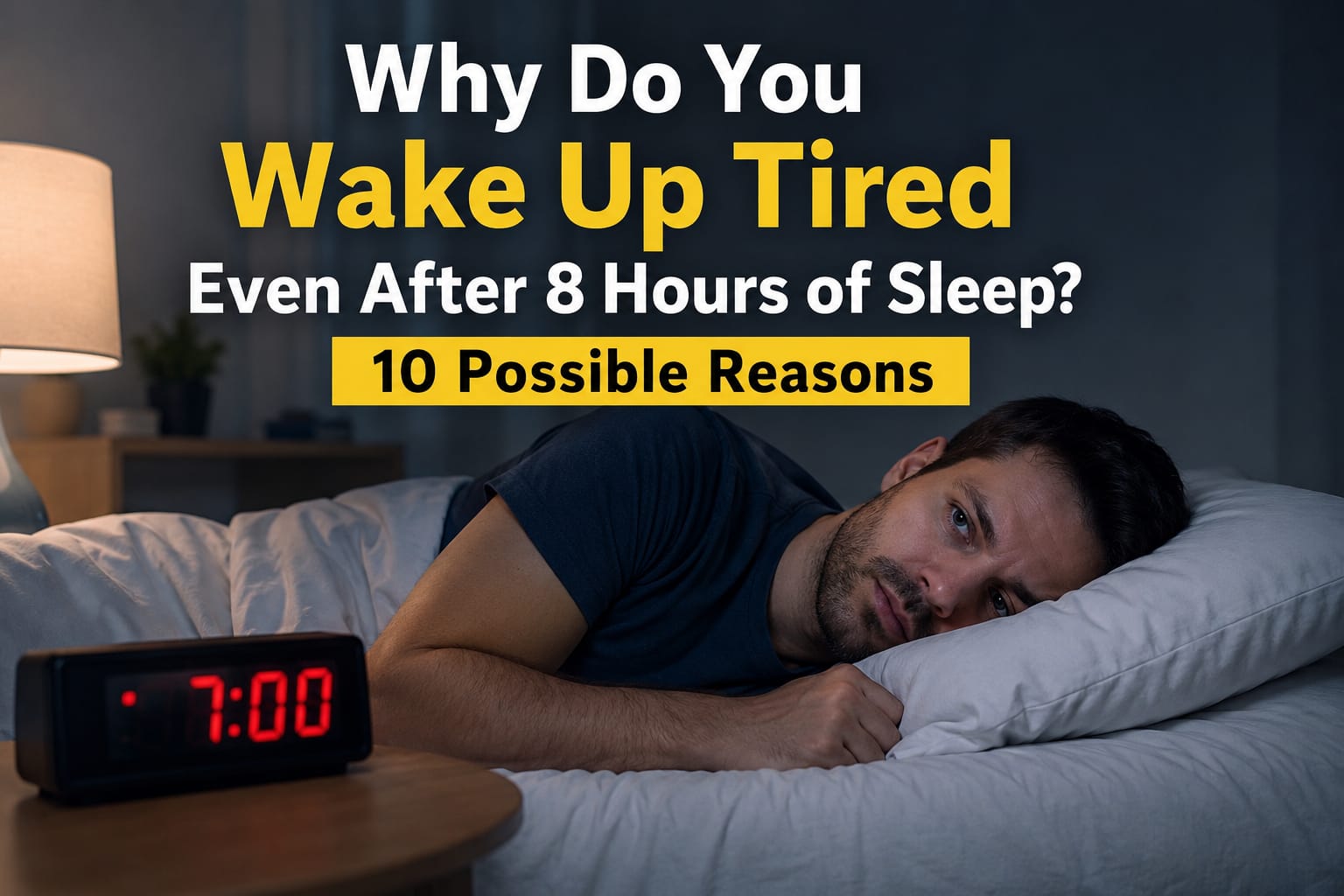
Why Do You Wake Up Tired Even After 8 Hours of Sleep? 10 Possible Reasons
Have You Ever Slept for 8 Hours… But Still Felt Exhausted?
The alarm rings.
You open your eyes. But instead of feeling refreshed, you feel like you barely slept at all. Your body feels heavy. Your mind is foggy. Even making a cup of coffee feels like hard work.
Sound familiar?
If you wake up tired even after 8 hours of sleep, you’re not alone. Millions of people experience this every day. And no, it’s not always because you’re lazy or “just getting older.”
Sometimes your body is trying to tell you something.
It could be your sleep quality. A vitamin deficiency. Stress that’s quietly building up. Or even a medical condition you haven’t noticed yet.
The good news? Most causes can be identified. And many can be improved with simple lifestyle changes.
Let’s look at some of the most common reasons why you wake up tired even after 8 hours of sleep.
1. You’re Sleeping Long Enough… But Not Sleeping Well
Eight hours on the clock doesn’t always mean eight hours of quality sleep.
Your brain moves through different sleep stages every night. Deep sleep helps your body recover. REM sleep supports memory and learning. If these stages keep getting interrupted, you may wake up feeling exhausted even after spending plenty of time in bed.
Maybe you wake up without realizing it. Maybe noise, stress, or even your phone is disturbing your sleep.
It’s sneaky. You don’t remember waking up. But your body does.
What may help
Keep your bedroom cool and dark.
Avoid screens for at least one hour before bed.
Try to sleep and wake up at the same time every day.
Limit caffeine later in the day.
Sometimes improving sleep quality matters more than adding another hour in bed.
2. Stress Doesn’t Clock Out When You Do
Here’s the strange thing about stress.
You can fall asleep just fine… and still spend the whole night sleeping poorly.
When you’re stressed, your body produces more cortisol, often called the stress hormone. High cortisol levels can make sleep lighter and less restorative.
Have you ever woken up already feeling worried?
That’s a clue.
Chronic stress doesn’t just affect your mood. It affects your sleep, energy, concentration, and even your immune system.
Signs stress may be affecting your sleep
Racing thoughts before bed
Waking up several times during the night
Morning headaches
Feeling mentally exhausted despite sleeping
Even a few minutes of deep breathing, light stretching, or reading before bed can sometimes make a noticeable difference.
3. You Could Be Low in Vitamin B12
Not everyone thinks about vitamins when they’re tired.
But Vitamin B12 plays a major role in making healthy red blood cells and keeping your nervous system working properly.
When levels become too low, your body may struggle to deliver enough oxygen to tissues. The result?
Constant fatigue.
Some people also notice tingling in their hands or feet. Others develop memory problems or feel unusually weak.
Vegetarians, vegans, older adults, and people with certain digestive conditions may have a higher risk of Vitamin B12 deficiency.
If you wake up tired even after 8 hours of sleep, and the tiredness doesn’t improve, it’s worth discussing a blood test with your healthcare provider.
4. Your Body May Be Low in Iron
Iron deficiency is one of the most common nutritional deficiencies worldwide.
And fatigue is often the very first symptom.
Without enough iron, your body can’t produce enough healthy red blood cells to carry oxygen effectively. Your muscles and brain simply don’t get the oxygen they need.
Many people don’t realize they’re low in iron until they start feeling exhausted all the time.
Other symptoms can include:
Pale skin
Shortness of breath
Cold hands and feet
Frequent headaches
Difficulty concentrating
Women with heavy menstrual periods are particularly at risk, but iron deficiency can affect anyone.
Before taking iron supplements, it’s important to get tested. Too much iron can also be harmful.
Perfect. We’ll continue in the same human style.
5. You Might Have Sleep Apnea Without Knowing It
Here’s something many people don’t realize.
You can sleep for eight or even nine hours… and still wake up exhausted.
Why?
Because your breathing may be stopping for a few seconds at a time while you sleep.
It’s called sleep apnea. And it’s more common than most people think.
Every time your breathing pauses, your brain briefly wakes you up to restart it. You usually don’t remember these tiny awakenings. But your body does.
Imagine trying to charge your phone all night while someone keeps unplugging it every few minutes. It never reaches 100%.
That’s what sleep apnea can do to your body.
Common signs include:
Loud snoring
Waking up gasping for air
Morning headaches
Dry mouth when you wake up
Feeling sleepy during the day, even after a full night’s sleep
If someone has told you that you snore loudly or stop breathing while sleeping, don’t ignore it. A healthcare provider may recommend a sleep study to find out what’s happening.
6. Dehydration Can Drain Your Energy
You don’t have to feel thirsty to be dehydrated.
In fact, mild dehydration often shows up as fatigue before anything else.
Your body relies on water for almost everything. Blood circulation. Temperature control. Brain function. Even carrying oxygen and nutrients to your cells.
When you’re not drinking enough fluids, everything slows down just a little.
You might notice:
Low energy
Dizziness
Dry mouth
Headaches
Difficulty focusing
Sometimes the solution is surprisingly simple.
Try drinking enough water throughout the day instead of waiting until you feel thirsty.
If you drink a lot of coffee or spend time in hot weather, your fluid needs may be even higher.
7. Your Thyroid Might Be Slowing Things Down
Think of your thyroid as your body’s engine.
When it’s working well, everything runs smoothly.
When it slows down, you slow down too.
An underactive thyroid, also called hypothyroidism, can make you feel tired almost all the time.
Even after a full night’s sleep.
Other symptoms may include:
Weight gain
Feeling cold more often
Dry skin
Constipation
Hair thinning
Slower thinking
These symptoms usually appear gradually, so many people assume they’re just getting older or dealing with stress.
A simple blood test can often help determine whether your thyroid is working properly.
8. Blood Sugar Ups and Downs Can Leave You Feeling Drained
Have you ever eaten a sugary snack and felt full of energy…
Only to crash an hour later?
Blood sugar swings can affect how energetic you feel.
Eating large amounts of refined carbohydrates or sugary foods, especially close to bedtime, may cause your blood sugar to rise quickly and then fall.
That sudden drop can leave you feeling sluggish the next morning.
Try building meals around:
Lean protein
Whole grains
Healthy fats
Vegetables
Fiber-rich foods
These foods help provide steadier energy throughout the day.
9. Your Mental Health Matters More Than You Think
Sometimes tiredness isn’t just physical.
It can be emotional.
Stress, anxiety, and depression can all affect the quality of your sleep.
Some people with depression sleep very little.
Others sleep much more than usual.
Yet neither group feels rested.
If you’ve been feeling tired for weeks, losing interest in things you usually enjoy, or finding everyday tasks unusually difficult, it may be worth talking to a healthcare professional.
Looking after your mental health is just as important as looking after your physical health.
10. Your Evening Habits Could Be Working Against You
This one catches a lot of people by surprise.
The problem isn’t always how long you sleep.
Sometimes it’s what you do before you sleep.
Scrolling social media for an hour.
Watching exciting TV shows.
Eating a heavy meal late at night.
Drinking caffeine in the evening.
These habits can make it harder for your brain to settle into deep, restorative sleep.
Try creating a simple bedtime routine.
Nothing complicated.
Dim the lights.
Put your phone away.
Read a few pages of a book.
Take a warm shower.
Your brain loves routine. Give it one.
So… Why Do You Wake Up Tired Even After 8 Hours of Sleep?
If you wake up tired even after 8 hours of sleep, don’t assume it’s normal.
Sometimes it’s something as simple as poor sleep habits or dehydration.
Other times, it may point to a vitamin deficiency, a thyroid problem, sleep apnea, or another medical condition that deserves attention.
Listen to your body.
Persistent fatigue isn’t something you should ignore.
Small lifestyle changes may help. But if the problem continues for several weeks or is affecting your daily life, it’s a good idea to speak with a qualified healthcare professional.
After all, sleep should leave you feeling restored—not more exhausted than when you went to bed.
Frequently Asked Questions
Why do I wake up tired even after 8 hours of sleep?
Poor sleep quality, stress, vitamin deficiencies, sleep apnea, thyroid disorders, dehydration, or other health conditions can all contribute. If fatigue persists, consult a healthcare professional for evaluation.
Can vitamin deficiencies make me feel tired?
Yes. Low levels of Vitamin B12, iron, or Vitamin D are common causes of ongoing fatigue and low energy.
Is it normal to feel tired every morning?
Occasional tiredness is common, especially after a stressful day. However, waking up exhausted every morning is not considered normal and may require further investigation.
When should I see a doctor?
If you’ve been feeling unusually tired for more than two to four weeks, or if your fatigue is accompanied by symptoms like shortness of breath, chest pain, unexplained weight loss, or severe daytime sleepiness, seek medical advice promptly.
Medical Disclaimer:
This article is for educational purposes only and should not replace professional medical advice, diagnosis, or treatment. Always consult a qualified healthcare professional regarding any persistent symptoms or health concerns.
You May Also Like
If you found this article helpful, you may also enjoy these health guides:
10 Warning Signs of Magnesium Deficiency You Should Never Ignore
Mediterranean Diet for Fatty Liver | Best Foods to Reduce Liver Fat Naturally
How a Healthy Sex Life Shapes a Better Lifestyle
Take a few minutes to explore these articles and learn simple, science-backed ways to improve your overall health and well-being.